

This article includes how anxiety affects sleep, the sleep anxiety treatment, and lifestyle strategies that may help to improve sleep quality.
How Anxiety affects Sleep
- Anxiety disorders are strongly associated with insomnia. Anxious people frequently find it difficult to fall asleep because they are constantly thinking even when they are physically exhausted. They call it tired but weird.
- Anxiety can make it difficult to fall asleep due to racing thoughts and increased alertness. Anxiety activates the body's stress response, also known as the 'fight-or-flight' response, which may increase sympathetic activity such as enhanced heart rate, increased breathing, and restlessness that may affect quality of sleep.
- During the day, distractions may prevent individuals from thinking about the worries, but at night the mind may become more active. Many people with anxiety insomnia describe lying awake worrying about future problems, work deadlines, family duties, or health concerns, which makes it difficult to fall asleep.
- Over time, repeated sleepless nights can make individuals anxious about bedtime. Instead of feeling relaxed, they start worrying about whether they will be able to sleep, which keeps the mind alert and makes sleeping difficult.
- Anxiety insomnia often results in significant daytime consequences, such as irritability or fatigue, trouble in concentration, and lower productivity at work.
- Poor sleep may increase emotional sensitivity and stress levels, which can make people more prone to anxiety.
- As a result, individuals often experience a vicious cycle in which anxiety causes sleep problems, which in turn enhances anxiety symptoms.
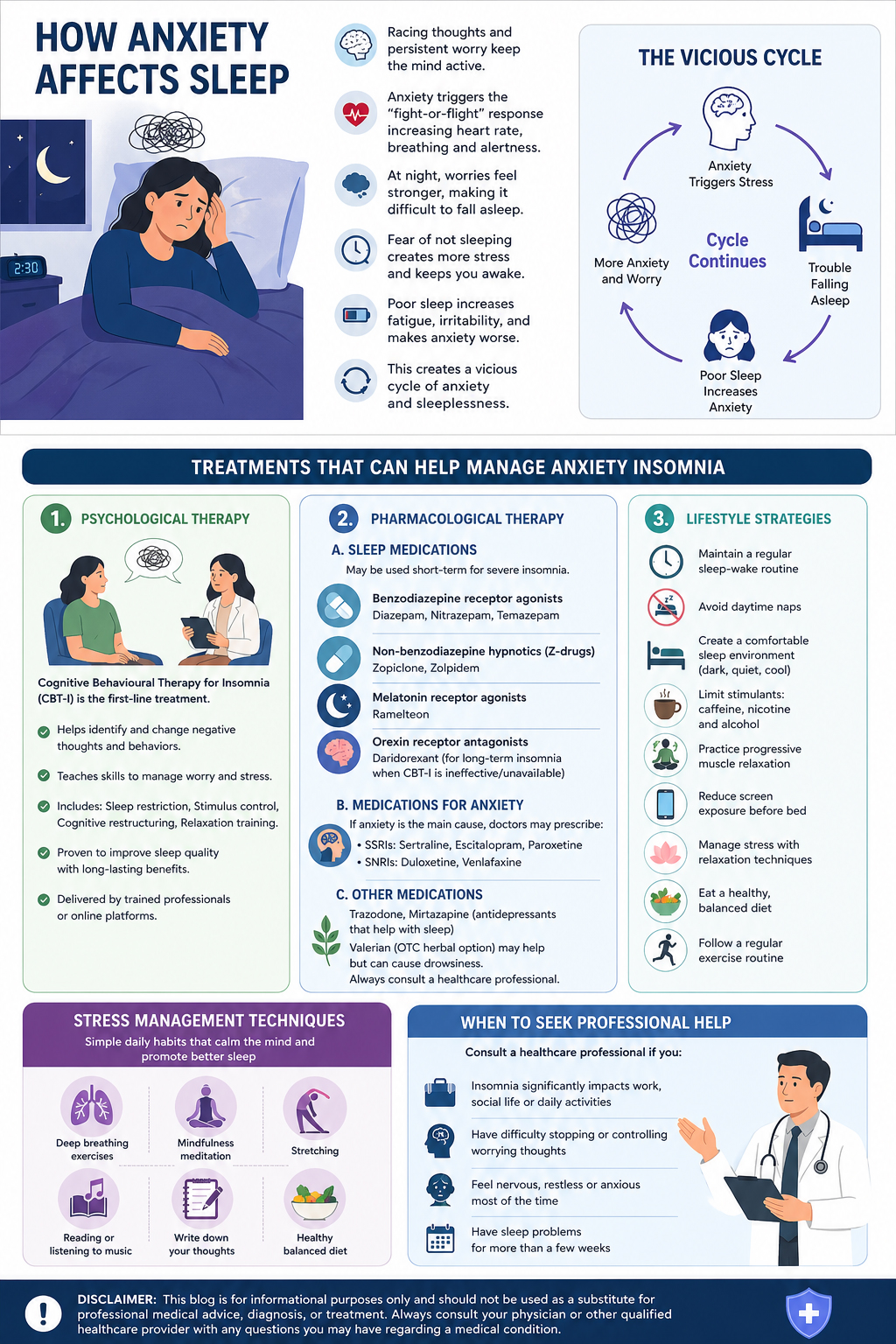
Treatments that can help in managing anxiety insomnia
Sleep anxiety treatment often requires treating both the sleep disturbance and the underlying anxiety. As symptoms may vary from individual to individual, a combination of therapies such as behavioural therapy, combination of behavioural strategies, psychological therapy, medications, and lifestyle strategies may be used depending on the severity of symptoms.
Psychological Therapy
- As anxiety is often the underlying cause of insomnia, treating anxiety itself is an important part of sleep anxiety treatment.
- Cognitive Behavioural Therapy (CBT-I) is treatment of choice, hence is considered the first-line treatment for chronic insomnia. It helps patient understands how their thoughts influence emotions and behaviour. Patients also learn practical skills to manage worry, reduce avoidance behaviours, and respond to stress more effectively.
- As anxiety levels improve, quality of sleep often becomes more regular and restorative.
- The therapy typically includes components sleep restriction therapy, stimulus control, cognitive restructuring and relaxation training.
- Clinical evidence shows that the therapy can greatly increase sleep quality and may produce long-lasting benefits compared with medication alone.
- These structured therapies are often delivered by trained healthcare professionals and may also be available through online health platforms.
Pharmacological therapy
Healthcare providers may recommend medications in some cases when insomnia is severe or when symptoms of anxiety start affecting daily life.
- Sleep Medications: Healthcare professionals may occasionally prescribe short-term sleep medications if insomnia is severe. These medications may include benzodiazepine or following medications:
- Benzodiazepine receptor agonists: Diazepam, nitrazepam and temazepam.
- Non-benzodiazepine hypnotics, 'Z-drugs' such as zopiclone, zolpidem
- Melatonin receptor agonists such as ramelteon
- Orexin receptor antagonists: Daridorexant for adults with long-term insomnia when CBT-1 has not been effective or is unavailable. It works by reducing wakefulness signals in the brain, helping individuals fall asleep and stay asleep more easily.
Sleep medications are normally used for short-term duration and should be taken after consulting healthcare professional to minimise risks such as tolerance, side effects, or dependency.
- Medications for Anxiety: If insomnia is primarily driven by anxiety disorders, doctors may prescribe medications that treat the underlying condition, such as:
- Selective serotonin reuptake inhibitors (SSRIs): Sertraline, Escitalopram, and Paroxetine
- Serotonin-noradrenaline reuptake inhibitors (SNRIs): Duloxetine, Venlafaxine
- Other Medications:
- Healthcare provider may prescribe Trazodone and mirtazapine are antidepressants that can help in sleep problem
- Valerian is an OTC herbal sleep medication but it has side effects such as drowsiness, so should consult healthcare provider before taking it.
Lifestyle Strategies
Healthcare professionals frequently advise lifestyle changes that improve quality of sleep in addition to medical care. It is possible to follow "Sleep hygiene practices' which include the following:
- Maintain a regular sleeping-waking routine
- Avoid taking naps during the daytime
- Comfortable bedroom setting- Dark, quiet,
- Limit stimulants such as caffeine, nicotine and alcohol
- Progressive muscle relaxation
- Cut down on Screen Exposure before bedtime
- Stress Management Techniques: Since anxiety plays a major role in sleep disturbance, managing stress may significantly improve sleep patterns. The following techniques may be used.
- Deep breathing exercises or mindfulness meditation
- Stretching
- Reading or listening to music
- Writing down your thoughts to declutter mind
- Following regular exercising schedule
- Maintaining a healthy balanced diet
When to Seek Professional Help
Most people experience occasional sleep difficulties, which are typically temporary and resolve with simple lifestyle changes. However, individuals should consider advice from a healthcare professional if:
- Insomnia significantly impacts work, social life or daily life activities
- Having difficult to stop thinking about problems
- Feeling nervous or anxious
A general practitioner may evaluate potential underlying causes, and suggest appropriate treatment approaches.
Conclusion
Quality of Sleep significantly affects the overall wellbeing of an individual. When anxiety starts getting in the way of trouble-free sleeping, it may lead to anxiety insomnia, which can have a serious impact on both emotional and physical health of an individual.
Effective sleep anxiety treatment usually involves a combination of behavioural strategies, psychological therapies, medications, and lifestyle changes. Although mild cases may respond to sleep hygiene and stress reduction strategies, more severe or chronic insomnia could require professional evaluation and structured therapy as it may affect overall health and wellness.
References
National Health Service, Insomnia, NHS, 2024 .
National Institute for Health and Care Excellence, Generalised Anxiety Disorder and Panic Disorder in Adults: Management, NICE Guideline CG113, 2023 .
National Institute for Health and Care Excellence, Daridorexant for Treating Long-term Insomnia, NICE Technology Appraisal TA922, 2023 .
NHS, Tips for Better Sleep, 2024 .
Royal College of Psychiatrists, Sleep and Mental Health, 2023 .
Medical Disclaimer
Information provided on this website is for educational purposes only and should not replace professional medical advice, diagnosis, or treatment. Always consult a qualified healthcare professional before starting or changing any treatment plan.

